Hearing Testing in Carlsbad, CA
Hearing loss can be gradual and difficult to notice until it’s advanced. That’s why you should have your hearing screened once a year. Not only will this help uncover changes in your hearing early, it can also detect early signs of other health issues.
Who Should Get a Hearing Test?

What Will a Hearing Test Show?
What Happens During a Hearing Test?
Types of Hearing Tests
Audiometric Hearing Test
Do you hear sounds but have trouble understanding speech? This test measures how well you hear different tones and words. We’ll say commonly misunderstood words, and you’ll repeat them back. The results, shown as a percentage, help determine whether hearing aids can improve your hearing.
Tympanometry Hearing Test
This test checks your middle ear function by gently changing the ear pressure. A flexible eardrum and normal bone conduction suggest that hearing loss isn’t caused by infection, congestion, or blockages.
Otoacoustic Emission Testing (OAEs)
How to Read Your Hearing Test Results
How Your Ear Works — and Why Hearing Tests Matter
Understanding Your Ear Before Your Hearing Test
A hearing test is easier to understand — and trust — when you know what’s being measured. Here’s a quick look at how sound travels through your ear and where things can go wrong.
Sound enters through the outer ear (the pinna and ear canal) and causes your eardrum to vibrate. Those vibrations pass through three tiny bones in the middle ear — the malleus, incus, and stapes — which amplify and transfer the signal to the fluid-filled cochlea in the inner ear. Inside the cochlea, thousands of microscopic hair cells convert that fluid movement into electrical nerve impulses, which travel to the brain for interpretation. The vestibular system, also housed in the inner ear, plays a critical role in balance and spatial orientation.
Hearing loss can occur at any point along this pathway — and that’s exactly what your hearing test at San Diego Ear, Nose and Throat in Carlsbad is designed to pinpoint.
The Three Types of Hearing Loss
Sensorineural Hearing Loss results from damage to the inner ear (cochlea) or the auditory nerve itself.
Conductive Hearing Loss occurs when something in the outer or middle ear is blocking or disrupting the transmission of sound — such as fluid in the middle ear, a perforated eardrum, earwax buildup, or an infection.
Mixed Hearing Loss involves elements of both types simultaneously. The conductive component may be correctable; however, an underlying sensorineural component will remain permanent.
Your audiogram will show which type of hearing loss is present and how severe it is. Our specialists will walk you through your results in plain language at your appointment.
When Should You Request a Hearing Test?
Beyond lifestyle symptoms (difficulty following conversations, turning up the TV), there are specific medical situations where a hearing evaluation is essential before appropriate treatment can begin:
- Tinnitus (ringing, buzzing, or hissing in the ears): Many causes of tinnitus are connected to hearing loss. A hearing test establishes whether an underlying hearing concern is contributing to the symptom.
- Dizziness, vertigo, or imbalance: The cochlea (hearing) and vestibular system (balance) are physically connected in the inner ear. Balance concerns frequently co-occur with hearing changes, and an audiogram helps identify the underlying condition.
- Ear fullness, pressure, or clogged sensation: These symptoms can indicate fluid behind the eardrum, Eustachian tube dysfunction, or other middle ear conditions. The hearing test helps determine the cause.
- Sudden change in hearing: Any sudden or rapid decline in hearing is a medical urgency and should be evaluated as quickly as possible.
As an ENT practice, we are uniquely equipped to evaluate and treat all of these conditions — beginning with a thorough hearing assessment.
What to Expect at Your Hearing Test — and What Happens Next
Your Hearing Test at San Diego ENT in Carlsbad: A Step-by-Step Guide
Many patients put off hearing evaluations simply because they don’t know what the appointment looks like. Here’s exactly what to expect when you come in — from arrival to next steps.
Step 1: Health and Listening History (10–15 minutes)
Your visit begins with a conversation. We’ll ask about your overall health history, any medications you’re currently taking (some are known to affect hearing), and the specific environments where you notice difficulty hearing. The more detail you can share, the more precisely we can tailor your evaluation.
Step 2: Physical Ear Exam (Otoscopy)
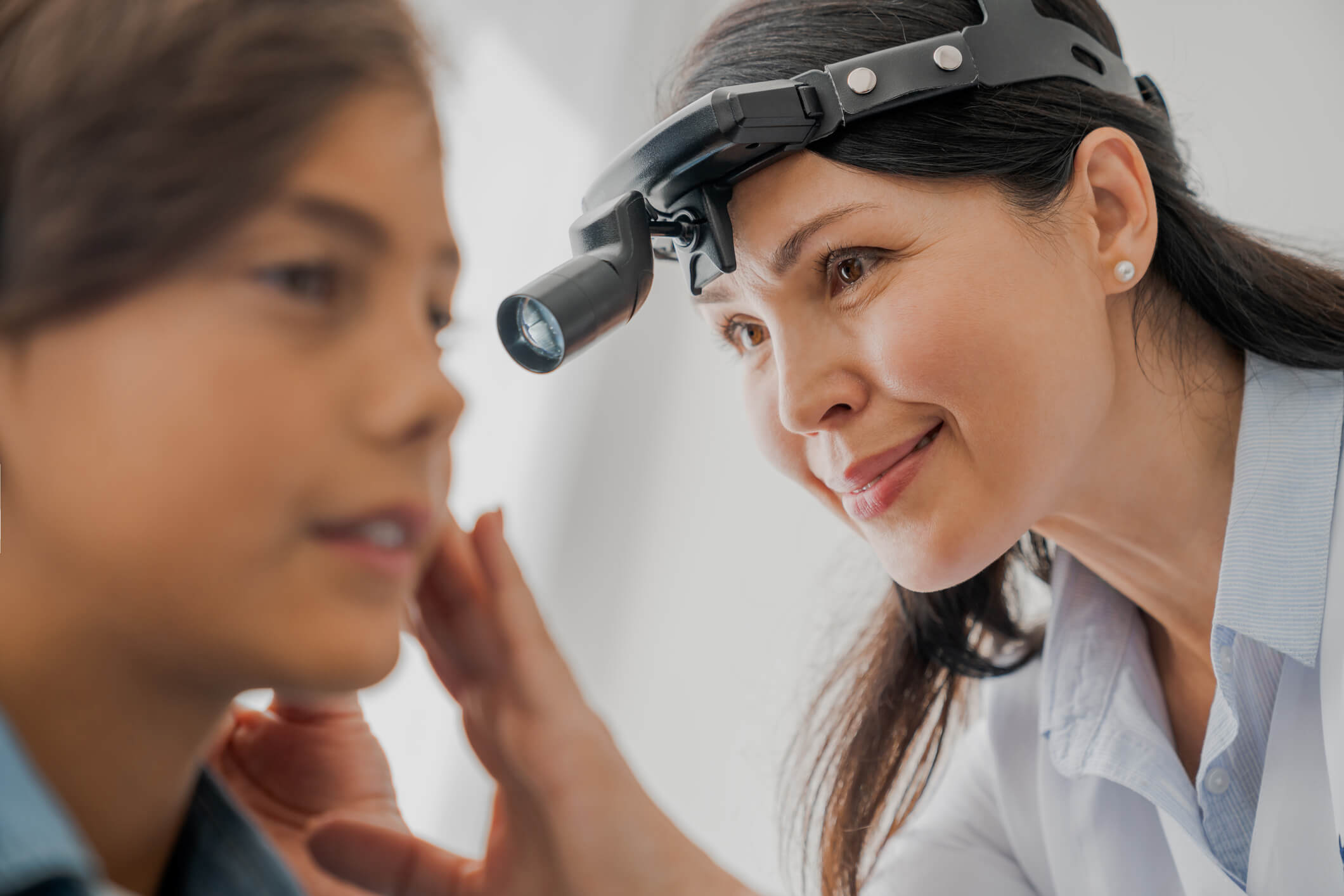
Before any formal testing, we examine your ear canals and eardrums directly. This allows us to identify earwax buildup, signs of infection, fluid behind the eardrum, or eardrum perforations — any of which can affect both your test results and your treatment plan.
Step 3: Hearing Tests in a Soundproof Booth (20–30 minutes)
You’ll move into a quiet, soundproofed booth and put on headphones. Testing is completely painless and non-invasive. Depending on your symptoms and initial exam findings, you may undergo any combination of:
- Pure-tone audiometry — listening for tones at different frequencies and volumes, one ear at a time
- Speech recognition testing — repeating words to measure how clearly you understand speech
- Tympanometry — a brief pressure test that evaluates your middle ear function
- Otoacoustic Emission (OAE) testing — measuring your inner ear’s response to sound
- Bone conduction testing — isolating inner ear function from middle ear function
Step 4: Results Review (10–15 minutes)
Your results are available immediately. Your audiogram will be reviewed with you in plain language — we’ll show you what your hearing sensitivity looks like across frequencies, identify any areas of concern, and explain what the findings mean for your daily life.
Step 5: Treatment Discussion and Next Steps
If hearing loss is present, we’ll discuss your options based on the type and degree of loss identified. For conductive hearing loss, medical or surgical options may resolve the issue entirely. For sensorineural hearing loss, we’ll discuss hearing aid options matched to your specific audiogram, lifestyle, and preferences.
Complimentary Hearing Consultation — No Obligation
Your initial hearing treatment consultation at San Diego ENT is complimentary. There is no pressure and no commitment required. Our goal is simply to give you the clearest possible picture of your hearing health so you can make informed decisions.
Insurance and Financing
We accept many insurance plans. Please visit our Insurances Accepted page to verify your coverage before your appointment, or call us and we’ll help confirm your benefits.
Most appointments, including testing and results review, take less than one hour.
You don’t have to live with hearing loss. Call or Text Us
Complimentary Hearing Treatment Consultations
Call today to schedule a consultation.