When your hearing feels dampened, it can interfere with your daily schedule and leave you feeling detached from your surroundings. It is common to presume that muffled sound indicates long-term hearing impairment, but the issue is often just a resolvable cerumen obstruction.
Understanding the distinction between earwax buildup vs. auditory loss can help you know when a simple solution is possible and when it’s time to seek a hearing evaluation. In the event you are experiencing dull hearing, don’t panic. While only a clinician can confirm the cause, reviewing these essential markers of wax vs. auditory decline can provide instant insight.
What Earwax Buildup Feels Like
Cerumen (cerumen) is a normal, protective substance that helps trap dust and debris and keeps the auditory canal healthy. Clinical issues only develop when the wax neglects to migrate out of the ear, resulting in a significant buildup or impaction.
Standard markers of an obstruction involve:
- Dampened sound quality that occurs over time or suddenly
- The perception that there is a physical obstruction in the canal
- Canal irritation or slight pain
- Buzzing in the ear (tinnitus)
- Hearing that clears temporarily after yawning or eating
Earwax-related hearing issues are often asymmetrical, affecting one ear more than the other. The positive aspect is that clinical clearance typically results in an instant restoration of your original hearing levels.
How Hearing Impairment Usually Manifests
Unlike a temporary blockage, nerve-based hearing deficit usually advances steadily over decades and is not fixed by clearing the canal.
Signs of true auditory impairment may include:
- Battling to track discourse when ambient sound is audible
- Constantly asking others to restate themselves
- A habit to boost sound volume significantly to make up for hearing loss
- Reduced sensitivity to high-frequency auditory input
- Hearing uniformly diminished in both ears
A vital distinction is that true loss lacks the tangible “plugged” sensation that follows a cerumen impaction.
Contrasting Cerumen Blockage and Auditory Loss
By looking at the onset and particular symptoms, you can frequently determine which condition is impacting you:
- Progression: Obstructions can feel instant, while hearing loss is virtually always slow
- Duration: Cerumen issues are fixable and short-term, whereas loss is typically long-term
- Symptoms: Fullness and irritation indicate wax; speech clarity issues indicate impairment
- Balance: Clogs are often unbalanced, but lasting loss is frequently two-sided
The Risks of DIY Ear Cleaning
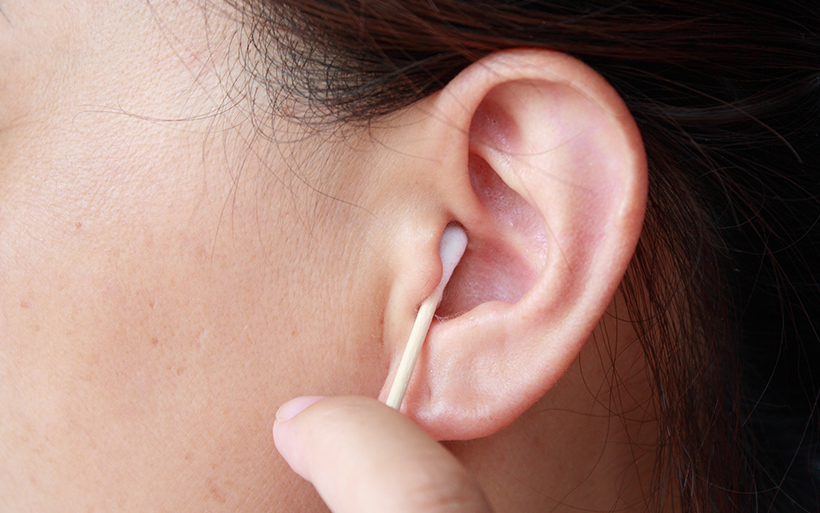
Many people make the error of attempting to extract a perceived blockage themselves using probes or household items. Using external objects typically pushes the obstruction deeper into the canal, increasing the risk of injury.
Medical research indicates that DIY removal often leads to accidental injury or increasingly difficult-to-treat impactions.
On the other hand, assuming a concern is just wax when it is actually auditory impairment can prevent you from obtaining the help you require to stay engaged.
Ways a Clinical Evaluation Helps
A specialist can employ an earlight to immediately visualize if a mechanical obstruction is visible.
If a blockage is identified, a professional can clear it safely, often restoring your hearing immediately.
If no wax is detected, a diagnostic hearing test will be used to identify the type and degree of any underlying loss.
The National Institute on Deafness and Other Communication Disorders (NIDCD) advises immediate evaluation anytime changes in auditory function interfere with your everyday life.
Finding the Correct Path for Better Sound Quality
Feeling as if sounds are dull doesn’t necessarily indicate a lasting change.
Very often, the problem is simply an accumulation of cerumen that can be easily cleared.
Obtaining professional attention ensures you locate the specific cause and the proper solution for your auditory requirements.
In the end, an audiology exam is the only certain way to distinguish between a fleeting obstruction and a lasting change.
Addressing the issue now halts the anxiety of the uncertainty and puts you on the path to better hearing.
If you’ve observed a change in your hearing, reach out to our office for a professional evaluation today.