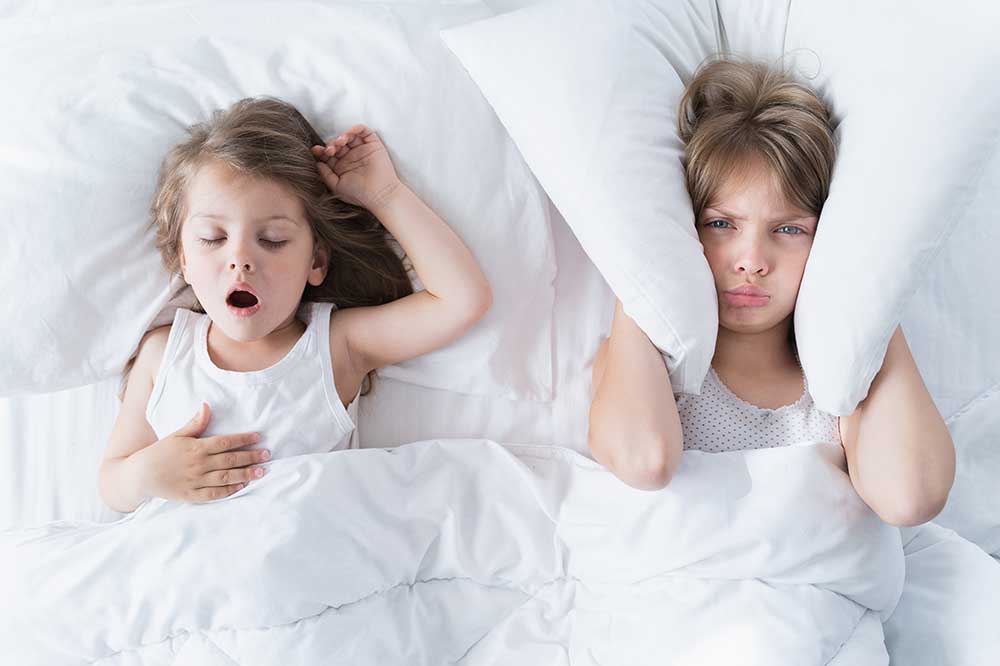
Many parents hear their child snore and wonder whether it’s something to worry about. Snoring is common and usually harmless in children, but it’s worth tracking how often it happens and how loud it gets, because it can point to breathing problems during sleep. At San Diego Ear, Nose & Throat Specialists in Carlsbad, our board-certified ENT physicians and physician assistant evaluate a child’s nose, throat, and airway, identify the cause of the snoring, and help families decide whether treatment is needed.
When snoring does disrupt sleep, the right treatment can help restore a child’s energy and mood during the day. Call or text 760-334-5466 to schedule an evaluation for your child.
What Are the Most Common Reasons Kids Snore?
Kids snore when airflow through the nose and throat is partly blocked during sleep, which makes the tissues of the airway vibrate. Enlarged tonsils and adenoids, nasal congestion from colds or allergies, and structural differences in the nose, mouth, or throat are the most common reasons.
Possible causes of snoring in children include:
- Enlarged tonsils or adenoids
- Colds, respiratory infections, or seasonal allergies
- A deviated septum or enlarged nasal turbinates
- A narrow palate, small jaw, or narrowed voice box
- Being overweight
- Asthma or certain medical conditions, such as Down syndrome or cerebral palsy
Sleep position matters, too. Children are more likely to snore when sleeping on their backs than on their sides or stomachs.
What Kind of Snoring Is Typical During a Cold or Allergy Flare?
Light, occasional snoring is typical during a cold, an allergy flare, or a respiratory illness, and it is often a normal part of childhood. Quiet snoring that comes and goes and doesn’t disrupt sleep or affect daytime behavior usually doesn’t require treatment.
Snoring during a cold or respiratory virus may last a few days or weeks and typically resolves once congestion clears. It can also vary through the night depending on sleep stage and position.
Snoring without breathing problems or other symptoms is called primary snoring, and about 10% to 20% of children have it. Newborn snoring is also usually harmless and often improves as the airway matures or congestion clears. Still, snoring that continues for three months or longer should be evaluated, even if no other symptoms are present.
What Signs Point to Pediatric Sleep Apnea, Not Just Snoring?
Ordinary snoring is light, temporary, and doesn’t interrupt sleep, while pediatric sleep apnea involves loud snoring along with gasping, choking, or pauses in breathing that disrupt sleep and can affect a child’s behavior, learning, and health.
Sleep-disordered breathing ranges from loud, disruptive snoring to obstructive sleep apnea (OSA), in which breathing stops for 10 seconds or longer during sleep. Between 25% and 40% of children experience some form of sleep-disordered breathing, while about 2% to 4% have OSA.
Nighttime signs of a sleep disorder may include:
- Loud snoring that can be heard from another room
- Pauses in breathing, gasping, choking, or snorting
- Restless sleep or frequent waking
- Mouth breathing
- Bedwetting in a child who had previously stayed dry overnight
- Night sweats, nightmares, or teeth grinding
Daytime signs matter just as much. Children with sleep-disordered breathing may wake up tired, need naps, or struggle to concentrate at school. Some show hyperactivity, irritability, or behavior problems that can resemble attention disorders. Over time, poor sleep can affect growth, development, and learning.
How Is a Child Who Snores Most Nights Evaluated in Carlsbad?
At our Carlsbad office, a child who snores is evaluated with a review of symptoms and an exam of the nose, mouth, and throat, and a visit is worth scheduling if the snoring is loud, happens most nights, lasts three months or longer, or comes with gasping, pauses in breathing, restless sleep, or daytime tiredness and behavior changes. A pediatrician may provide a referral, or parents can contact our Carlsbad office directly to schedule.
Parents often grow so used to a child’s snoring that it no longer seems unusual. An evaluation can help determine whether the snoring is harmless or a sign of a breathing problem that needs treatment.
During the visit, one of our ENT physicians or providers reviews your child’s symptoms and sleep habits and examines the nose, mouth, and throat for enlarged tonsils, adenoids, or other blockages. A flexible camera, called an endoscope, may be used to view the airway more closely. If sleep apnea is suspected, your child’s ENT doctor may recommend an overnight sleep study to measure breathing, oxygen levels, and sleep quality.
Will Your Child Need Surgery, or Can Snoring Be Managed at Home?
Many children don’t need surgery for snoring, because mild snoring can often be managed with simple steps at home. Treatment depends on the cause and severity, and options range from managing allergies and congestion to removing enlarged tonsils and adenoids. For children with obstructive sleep apnea, tonsil and adenoid removal is often the first-line treatment, while CPAP may be used in some cases.
For mild snoring, these simple measures may help:
- Encouraging side or stomach sleeping
- Using a humidifier or saline nasal spray
- Reducing allergens with regular bedding washes and an air purifier
- Treating seasonal allergies with appropriate medication
For children over age three with sleep apnea and enlarged tonsils or adenoids, removing them is a common first-line treatment. Some children go home the same day, while others stay overnight. Overweight children may also benefit from weight management guided by their pediatrician. If surgery isn’t an option or symptoms continue, CPAP therapy can help keep the airway open during sleep.
After treatment, many children sleep better and show improvements in behavior, attention, and development. Because about 20% of children may still have sleep concerns after surgery, our ENT physicians may recommend a follow-up sleep study to confirm results.
Get Answers About Your Child’s Snoring in Carlsbad
If your child snores loudly or shows signs of disrupted sleep, the ENT team at San Diego Ear, Nose & Throat Specialists can help. A thorough exam can identify the cause of the snoring and determine whether treatment is needed to support healthier sleep.
Call or text 760-334-5466 or contact San Diego Ear, Nose & Throat Specialists to schedule an evaluation for your child at our Cassia Road office in Carlsbad.