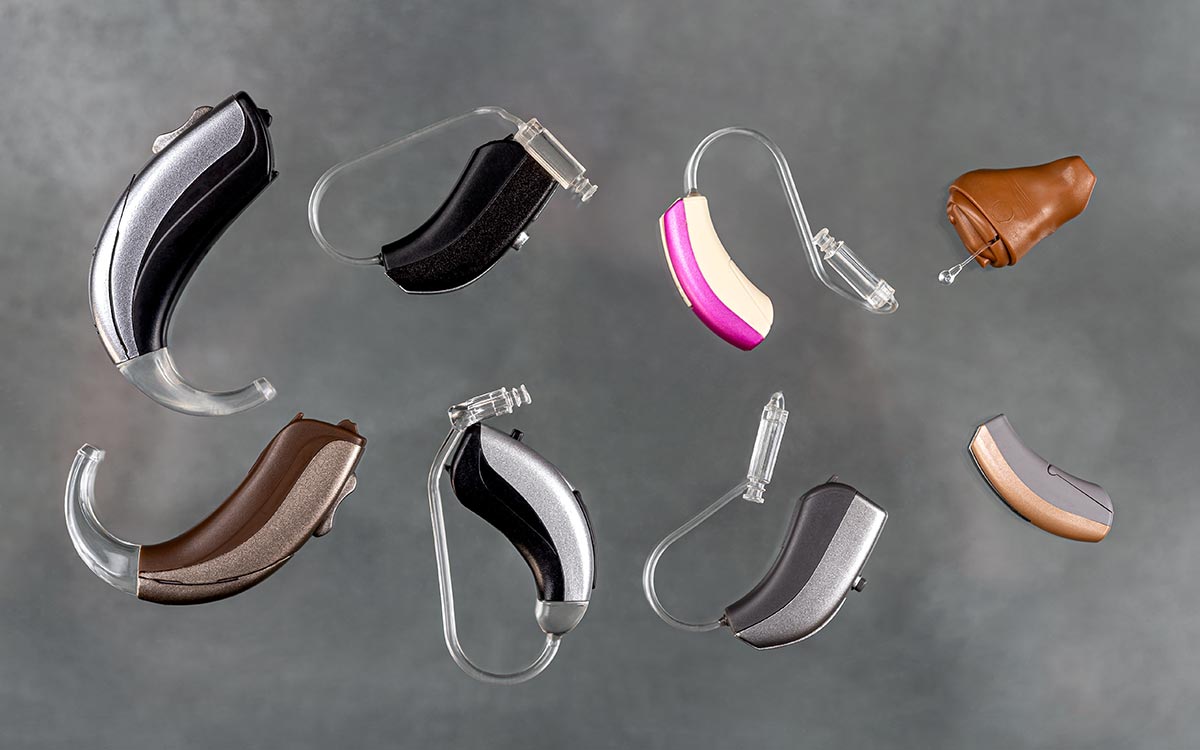
Selecting the right hearing aid can be an arduous task, given the wide array of styles, sizes, and technological features available in modern devices. Rest assured that there is a hearing device customized for every lifestyle and degree of hearing loss, and some devices can also help manage tinnitus. Success lies in locating the specific aid that meets your personal preferences.
Understanding the distinctions among the most common types of hearing aids can help you feel more informed and confident as you explore your options. We are going to analyze the primary styles available today to help you understand what sets each option apart.
Understanding In-the-Canal (ITC) Models
What they are:
ITC hearing aids rest partly in the ear canal, with a small portion visible at the outer ear.
Common Advantages:
- Offers a smaller shape than bulkier behind-the-ear units
- Specifically contoured to the user’s ear for an optimal fit
- Designed to treat low to moderate hearing impairments
Because they provide both discretion and useful features, ITC models are an excellent pick for those new to hearing technology.
IIC (Invisible-in-Canal) Technology
Core Traits:
As the most compact custom selection, IIC aids represent the smallest available style. This style fits deep in the ear for a completely covert appearance.
Primary Motivations:
- Highest degree of discretion for the wearer
- Pure sound quality due to mic placement
- So light and small that users often forget they are wearing them
Because of their small stature, IIC devices typically work best for mild to moderate hearing loss and for those who prefer an almost invisible option.
Understanding In-the-Ear (ITE) Units
Structural Data:
ITE devices are built to reside in the outer ear area, offering two different shell sizes based on your anatomy. These are custom-fabricated for a precise fit based on your ear’s anatomy.
Value Offering:
- The bigger size makes it feasible to include more internal components and longer-lasting batteries
- Simpler to handle for those with dexterity challenges
- Effective for an extensive range of hearing impairments, ranging from mild to severe
Many people prefer ITE devices because they provide an integrated, self-contained design that doesn’t hook over the ear.
Traditional BTE Units
Operation:
These devices sit on the external portion of the ear’s anatomy. Audio moves into the ear canal through a small tube or custom earmold.
Common Motivations:
- Known for being exceptionally adaptable and robust
- Provides an extensive range of amplification suitable for nearly any user
- Big enough to include sophisticated software and modern rechargeable technology
For those who prioritize a dependable device that is easy to manage and provides plenty of volume, BTE is an excellent choice.
RIC (Receiver-in-Canal) Summary
Component Layout:
RIC hearing aids appear similar to BTE models, but the speaker (receiver) sits inside the ear canal rather than inside the device behind the ear.
Market Interest:
- Minimizes the “plugged up” sensation for more pure hearing
- Offers a very low-profile appearance that is easy for almost everyone
- An adaptable choice that works for various degrees of auditory needs
RIC units are extremely common currently because they balance appearance with powerful functionality.
Extended-Wear Hearing Aids
Overview:
An audiologist places these specialized hearing aids deep into the canal, where they remain for multiple weeks.
Lifestyle Advantages:
- No routine insertion or removal
- Sitting low in the canal makes them completely hidden from view
- Designed to be worn during everyday activities, including sleeping and exercising
For an autonomous method of hearing assistance, extended-wear technology is the top recommendation.
Wireless Smart Syncing
Digital Features:
Connectivity-focused hearing aids that utilize radio to integrate with your digital life.
Why go wireless:
- Enjoy immediate sound streaming from your phone or TV right into your ears
- Modify settings via a mobile tool
- Enhances daily life by making technology interaction seamless and clear
Most contemporary RIC, BTE, and ITC hearing aids currently offer a Bluetooth-enabled version.
Surgically Implanted Middle-Ear Solutions
Technical Description:
A surgically implanted device that directly vibrates the middle ear bones to amplify sound.
Why implants are used:
- An accessible route for patients who are unable to wear standard acoustic devices
- Comfortable option for chronic ear issues related to traditional devices
Candidates for middle-ear implants must complete an exhaustive evaluation by an expert specialist.
Choosing the Right Style for Yourself
There is no one single “ideal” hearing aid; rather, there is an optimal one for you, determined by your medical needs and personal comfort. A specialist can offer the guidance needed to test out different styles and find the one that fits your life perfectly.
Begin your journey to clearer sound by setting up a hearing test now. Your future of confident communication starts with this first evaluation.
Sources:
https://www.mayoclinic.org/diseases-conditions/hearing-loss/in-depth/hearing-aids/art-
20044116
https://www.hearinglife.com/hearing-aids/types
https://www.nidcd.nih.gov/health/hearing-aids