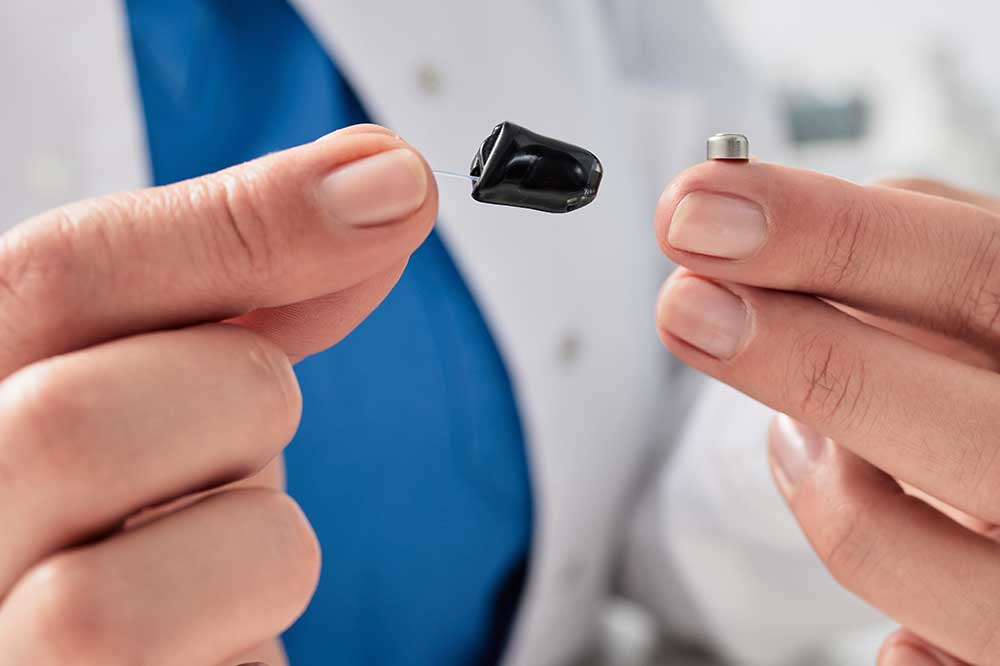
Hearing aid batteries usually last anywhere from three days to several weeks, depending mainly on usage and battery type. If yours seem to give out sooner than that, a few simple checks can often tell you why.
Audiologist Rachel Faga, Au.D., at San Diego Ear, Nose & Throat Specialists in Carlsbad can help you understand your hearing aids’ power needs, troubleshoot unexpectedly short battery life, and choose a manageable care routine. Recognizing what affects battery performance helps patients plan ahead and keep their hearing aids available when they need them.
How Do Battery Sizes 10, 312, 13, and 675 Compare for Runtime?
Disposable zinc-air hearing aid batteries in sizes 10, 312, 13, and 675 typically last three to 10 days, though some larger batteries may last longer. Battery size provides a useful starting point. Approximate ranges include:
- Size 10, yellow packaging: three to seven days
- Size 312, brown packaging: three to 10 days
- Size 13, orange packaging: six to 14 days
- Size 675, blue packaging: nine to 20 days
These ranges are estimates. Longer wearing hours, greater amplification needs, and frequent wireless streaming can shorten battery life. You must use the size specified for your hearing aid; you can’t upgrade to a larger battery.
Many rechargeable models provide a full day of listening after a single charge. About 20 to 30 hours is common, but some models offer more. Check your model’s specifications and ask how streaming changes its expected runtime.
Should You Go Rechargeable or Stick With Disposable Batteries?
Whether to go rechargeable or stay with disposable batteries depends on your routine, since neither is better for everyone; a disposable battery usually lasts longer between changes, while a built-in rechargeable battery can be charged repeatedly for several years. The right choice depends on how you live and listen.
Rechargeable hearing aids can simplify care if handling tiny batteries is difficult. They require a reliable charging routine and access to an appropriate charger. Portable charging cases may help during travel, depending on the model.
Daily wearing time, streaming habits, dexterity, travel plans, and device choices all matter. Rechargeable capacity can decline with age, so a battery that once lasted all day may eventually need professional replacement. If you are choosing new hearing aids, ask how each power option fits your day.
What Could Make a Fresh Hearing Aid Battery Drain Fast?
A fresh hearing aid battery or a full charge can drain fast because of heavier streaming or longer wear, an expired or wrong-size battery, a tab removed too early, or, for rechargeable aids, a charging problem. Start by comparing the change with your usual routine. More phone calls, music streaming, or longer wear times may explain increased power use. Record when batteries are changed or charged and when warnings begin.
For disposable batteries, check the expiration date, correct size, and whether the tab was removed too early. Try a fresh battery from another package if several replacements perform poorly.
For rechargeable aids, confirm that the charger has power and each device is seated correctly. Check the charging indicator rather than assuming that placing it in the case guarantees charging. Clean charging contacts only as instructed.
If short runtime persists, Rachel Faga can inspect the devices, assess charging equipment, and determine whether repair or battery replacement is needed. Bring your charger and usage notes. Avoid opening a sealed battery compartment or repeatedly trying to recharge a disposable battery.
What Precautions Matter Most When Replacing a Zinc-Air Cell?
The precautions that matter most when replacing a zinc-air cell are working over a towel with clean, dry hands, letting the new battery take in air before you insert it, never forcing the door, and keeping batteries away from children and pets. Keep the correct replacements nearby and follow your device’s instructions:
- Turn the hearing aid off and gently open the battery door.
- Remove the used battery.
- Peel the tab from a new zinc-air battery.
- Let air activate it for the recommended interval, usually about two minutes.
- Insert it with the positive marking aligned correctly and close the door gently.
If the door resists closing, check the battery’s size and position, but don’t force it. Rachel Faga can demonstrate replacement and recommend a handling tool if necessary.
Most modern rechargeable hearing aids have built-in batteries that patients should not replace at home. Arrange professional service when replacement is required.
Keep new and used batteries away from children, pets, food, and medications. Never hold batteries in your mouth. If someone may have swallowed one, contact poison control immediately for guidance.
How Can Carlsbad Patients Avoid Wasting Battery Power?
Carlsbad patients can avoid wasting battery power by storing batteries carefully, leaving tabs in place until use, and following a steady charging routine. For disposable batteries, try these steps:
- Leave protective tabs in place until you need each battery.
- Store batteries in their packaging at room temperature, away from moisture.
- Use older, unexpired packages before newer ones.
- Turn devices off when unused and open battery doors as instructed.
- Keep loose batteries away from coins, keys, and other metal objects.
Refrigerating batteries can expose them to moisture. Replacing the tab after activation does not restore a zinc-air battery to its original condition.
For rechargeable aids, follow the recommended charging schedule and use compatible charging equipment. Keep the devices and charger clean, and avoid excessive heat. Ask about storage instructions before leaving them unused for an extended period.
Unnecessary streaming uses extra power, but preserving battery life shouldn’t mean giving up important communication features. Talk with our audiologist about frequent shortages so the solution fits your needs.
Plan a Battery Consultation With Rachel Faga, Au.D., in Carlsbad
When battery problems keep cutting your listening day short, a consultation can help you return to a predictable routine. Bring your hearing aids, your charger if you use one, and notes about recent battery performance. You can learn what runtime is realistic, whether maintenance or service is needed, and which battery routine suits your lifestyle.
Call or text 760-334-5466 or send our office a message to schedule an appointment at San Diego Ear, Nose & Throat Specialists, serving patients across North County San Diego.