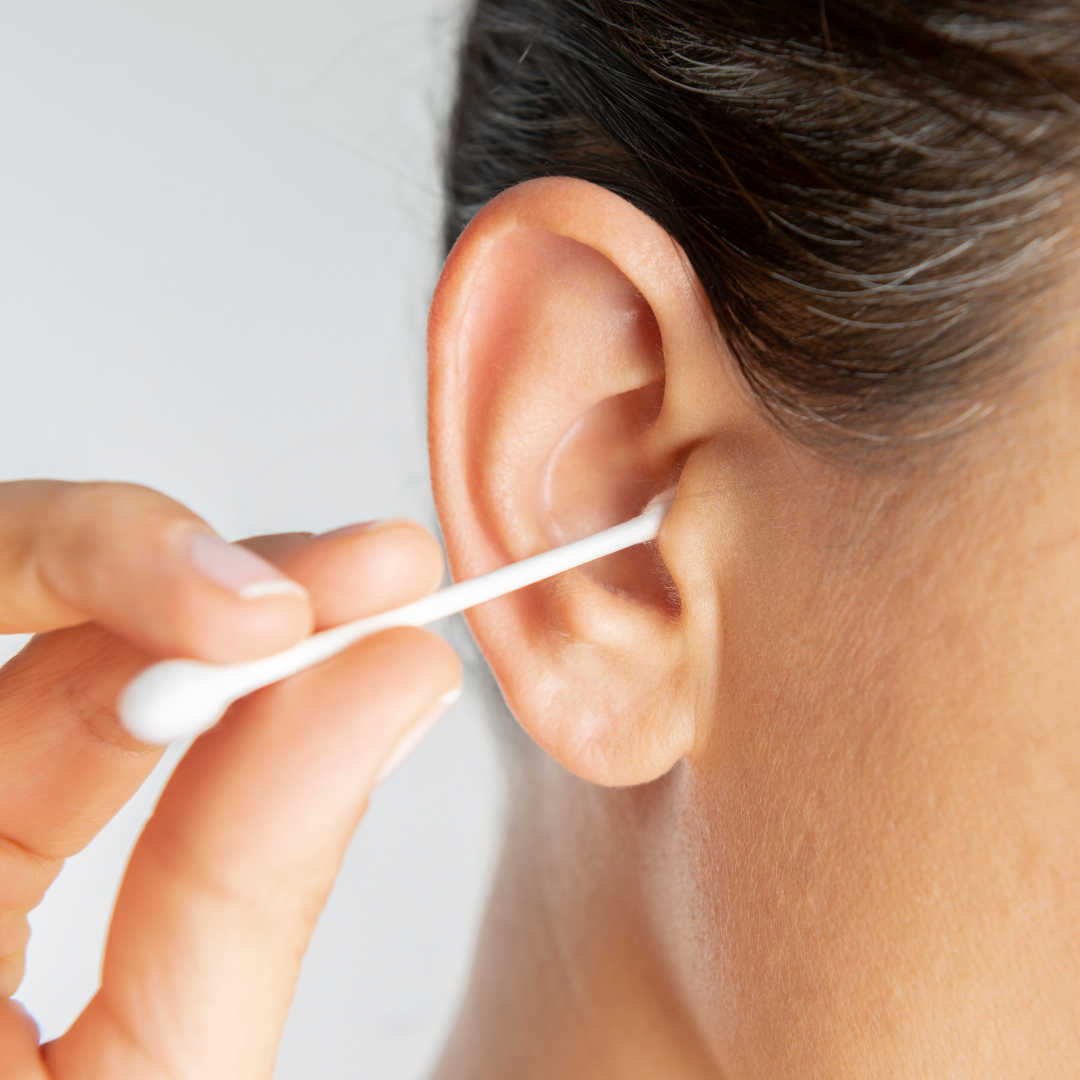
Cotton swabs may seem like convenient ear-cleaning tools, but inserting one into the ear canal can make cleaning harder over time and may damage your ears. Our audiology team evaluates whether cerumen accumulation requires clinical extraction and suggests techniques tailored to your auditory health. Healthy ears rarely require aggressive manual intervention; nevertheless, when blockage develops, we assist patients in safely extracting excess cerumen.
What Makes Q-Tips Harmful to Ear Health?
Human earwax, formally designated as cerumen, is a functional secretion rather than unwanted dirt. Cerumen collects particulate matter, inhibits microbial proliferation, moisturizes the epithelial lining, and shields sensitive canal tissues. Normal jaw articulation and progressive skin turnover transport old cerumen toward the external ear opening, where it naturally detaches.
A Q-Tip placed inside the canal can disrupt this self-cleaning process. Even though the applicator collects minor residue, it typically drives the bulk of cerumen directly toward the delicate eardrum. Ongoing cotton swab use regularly condenses wax into a solid obstruction, causing a congested feeling that drives repetitive cleaning attempts.
Although swabs can sanitize the outer folds of the auricle, they should never penetrate the delicate ear canal.
How Cotton Swabs Cause Physical Trauma to the Ear
The delicate dermal lining of the auditory canal is remarkably thin and susceptible to lacerations. Tiny skin lacerations provoke pain and bleeding while forming entry pathways for pathogens, multiplying the chance of external ear infections. In addition, the cotton head can loosen and become retained as an obstructing foreign object in the ear.
Clinically documented swab injuries include:
- Deep mechanical cerumen impaction
- Canal abrasions, dermal irritation, edema, and hemorrhage
- Acute otitis externa or canal infection
- Cotton swab fragments trapped inside the auditory canal
- Structural tears or perforations across the eardrum
- Trauma inflicted on the ossicular chain behind the eardrum
- Transient or irreversible shifts in hearing thresholds
- Ringing in the ears, balance disruption, or sharp ear pain
Although catastrophic damage remains relatively rare, unexpected arm bumps, hand slips, or excessive insertion depth easily cause acute harm.
Determining the Proper Frequency for Earwax Removal
Most healthy adults have no clinical need to extract earwax on a set timetable. Normal anatomical mechanisms steadily push cerumen toward the exterior, where regular washing rinses the visible concha. Excessive cleaning strips natural oils, inflames delicate canal skin, and substantially elevates the chance of infection or impaction.
Cerumen removal is indicated when buildup obstructs the canal, hinders tympanic membrane visualization, degrades hearing aid performance, or generates symptoms.
Safe Protocols for Managing Cerumen at Home
In the absence of earwax symptoms, allowing natural physiological clearance is universally the safest strategy. Restrict hygiene to wiping the outer ear folds with a damp cloth while permitting the canal to self-evacuate.
When dense wax needs to be softened, we may suggest specialized OTC drops or solutions containing carbamide peroxide, saline, glycerin, or mineral oil. Apply only the specified dosage and never exceed the designated application duration outlined on the label. Stop if the drops cause pain, marked dizziness, rash, or worsening symptoms.
Home flushing is contraindicated in many cases and should solely be conducted after an expert confirms safety and reviews proper methods. Absolutely avoid using high-velocity dental water jets inside your auditory canal. Avoid hazardous gadgets including ear candles, sharp metal loops, camera-assisted tools, hair clips, and home vacuum extractors. These hazardous instruments often cause cutaneous burns, sharp cuts, eardrum ruptures, or compounded cerumen impaction.
When to Seek Audiological Care for Cerumen Impaction
You should book a clinical appointment if your ear feels blocked following softening drops, cerumen is deeply wedged, or home methods fail to work. Professional removal is also preferable when a person cannot safely hold still, has a narrow ear canal, uses hearing aids, or has medical or surgical factors that make drops or irrigation risky.
Obtain a focused audiological evaluation for:
- Sharp ear pain, chronic itching sensations, or localized tenderness
- Visible blood, purulent discharge, clear fluid drainage, or offensive ear odors
- Systemic fever spikes or acute swelling near the external ear
- New acoustic tinnitus sounds or unstable balance sensations
- Hearing loss that develops suddenly or continues after wax removal
- A suspected perforated eardrum or retained cotton tip
- Persistent impactions interfering with hearing aid operation
You should always treat sudden unilateral hearing loss as an urgent medical emergency instead of assuming simple cerumen occlusion. Prompt testing can distinguish a blockage from a time-sensitive inner-ear problem.
How Healthcare Providers Extract Impacted Earwax
We initiate the appointment by visualizing the canal through a diagnostic otoscope or microscope to verify wax presence and check for signs of infection, laceration, or eardrum tears. Choosing the safest clinical protocol relies on cerumen firmness, individual canal anatomy, medical records, otologic surgical history, and patient tolerance.
Safe audiological extraction methods include:
- Wax-softening drops before or during the appointment
- Regulated mechanical irrigation with body-temperature saline for sealed eardrums
- Controlled vacuum micro-suction under continuous visual monitoring
- Manual instrument removal utilizing specialized curettes, loops, or micro-forceps
Direct visualization allows the clinician to work around sensitive canal skin and stop if discomfort occurs. Utilizing more than one removal technique may be necessary to resolve dry or severely compacted wax. Upon completing removal, the clinician performs a final inspection to confirm optimal canal and eardrum health. If fullness, tinnitus, dizziness, or hearing difficulty continues, additional testing can identify another cause.
Schedule an Expert Cerumen Removal Consultation
Should you experience aural fullness or sudden hearing shifts, arrange a clinical evaluation with our office instead of relying on cotton swabs. The diagnostic session entails reviewing your symptom timeline, past otologic procedures, hearing aid usage, past home treatments, and risk factors for recurring cerumen. Connect with our practice today to reserve an appointment for safe, professional earwax removal.